

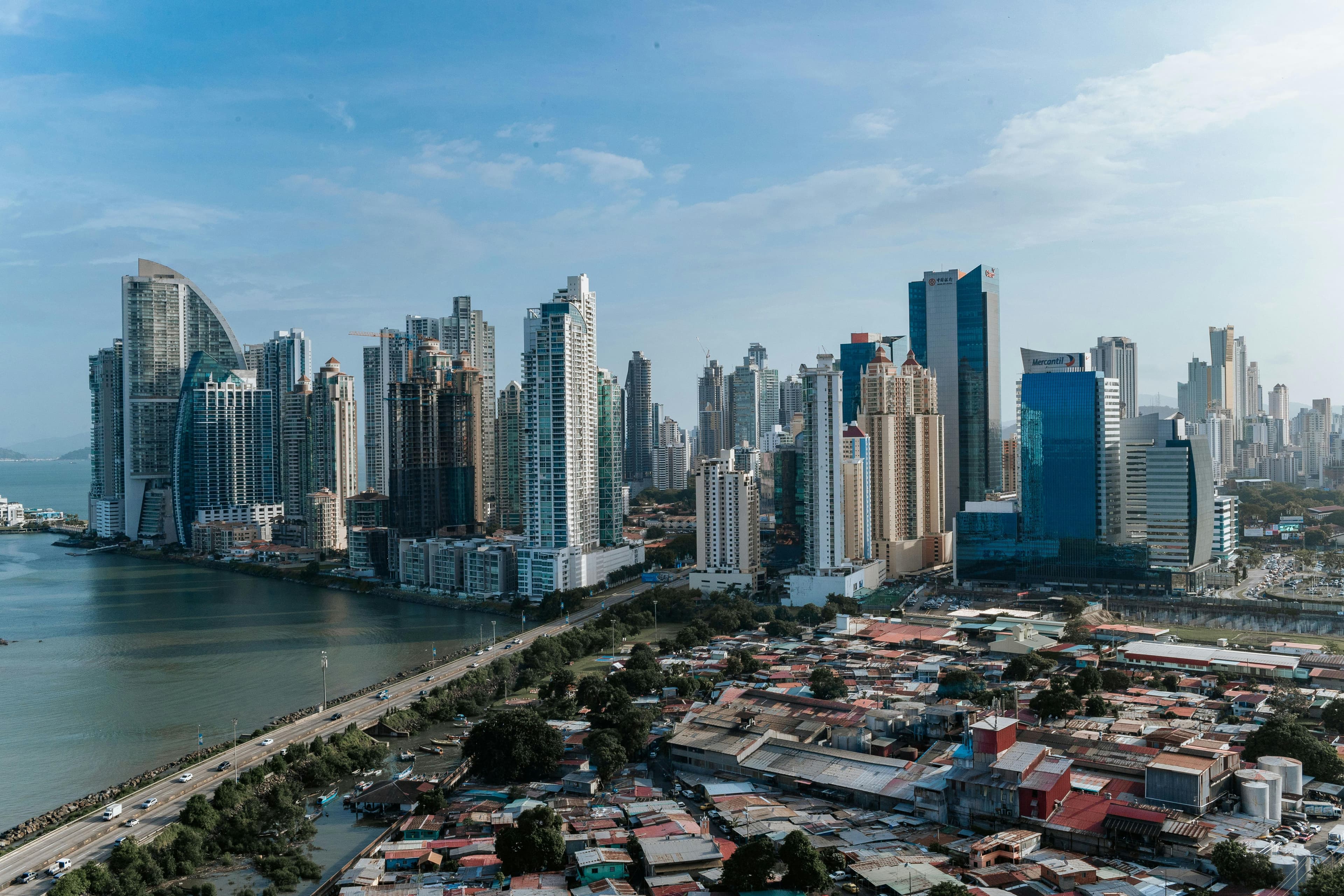
Panama
 Central America • UTC-5 • America/Panama
Panama's Territorial Tax System

Panama operates a territorial tax system, taxing only income generated within its borders. This applies to personal income, corporate income, and other taxes. Foreign-sourced income is generally exempt for residents.
Income Tax
0%–25%
Progressive rates

Corporate Tax
25%
Standard corporate tax rate

VAT / GST
7%
ITBMS (VAT)

Nomad Visa
Available
Digital Nomad Visa


Tax System Overview
Panama's tax system is based on the principle of territoriality, meaning only income derived from sources within Panama is subject to taxation. This makes it a favorable jurisdiction for individuals and businesses with foreign-sourced income.
System Type
Territorial tax system with progressive personal income tax.
Resident Taxation
Taxed only on Panamanian-source income. Foreign-source income is exempt.
Non-Resident Taxation
Taxed only on Panamanian-source income, typically at a flat rate or via withholding.
Tax Year
January 1 – December 31

Income Tax Bands
Official income tax bands for Panama based on annual taxable income in USD (2025).

Tax Treaty
Double Taxation Treaties aim to prevent individuals and businesses from being taxed twice on the same income by two different countries.
United States of America
Treaty ActivePanama and the United States have a Tax Information Exchange Agreement (TIEA) and an Income Tax Treaty. The treaty primarily focuses on preventing double taxation for certain types of income and facilitating information exchange, rather than broad tax relief.
Key Benefits
 Prevents double taxation on certain types of income for residents of both countries.
- Reduces withholding taxes on cross-border payments like dividends and interest.
- Provides mechanisms for resolving tax disputes between the two countries.
- Facilitates the exchange of tax information to combat tax evasion.

Totalization Agreement
Totalization agreements coordinate social security systems, ensuring workers pay into only one system at a time and can combine work credits for benefits.
United States of America
Agreement ActiveThe social security agreement between Panama and the United States prevents workers from paying social security taxes to both countries on the same earnings and helps workers qualify for benefits based on combined work credits.
Coverage Areas
Facts
- Eliminates dual social security taxation for workers temporarily assigned to the other country.
- Allows workers to combine periods of coverage in both countries to meet minimum eligibility requirements for benefits.
- Benefits are paid by the country where the worker qualifies, or proportionally by both if combined credits are needed.
Other Countries with Agreements

Business & Freelancing
Corporate Tax Rate
The standard corporate income tax rate in Panama is 25%. Certain special regimes or free zones may offer reduced rates.
VAT Registration
The Impuesto de Transferencia de Bienes Corporales Muebles y la Prestación de Servicios (ITBMS), Panama's VAT, is 7%. Businesses must register if their annual gross income exceeds $36,000.
Freelancer Rules
Freelancers and self-employed individuals are taxed on their Panamanian-source income under the progressive personal income tax rates. Foreign-sourced income remains exempt.
Crypto Policy
Panama has no specific cryptocurrency tax laws. Generally, capital gains from crypto are not taxed for individuals unless it constitutes a professional or habitual activity. Income from crypto mining or trading as a business would be taxed.
Frequently Asked Questions

Digital Nomad & Benefits
Visa Details
Tax Perks
- Foreign-sourced income is 100% tax-exempt under Panama's territorial tax system.
- No capital gains tax on publicly traded securities, including certain crypto assets if not a professional activity.
- USD as the official currency eliminates currency conversion risks and simplifies financial planning.
- No wealth tax or inheritance tax on assets located outside Panama.
Filing Roadmap
Obtain a RUC (Tax ID)
Register for a RUC (Registro Único de Contribuyente) at the Dirección General de Ingresos (DGI) if you will be earning Panamanian-source income or conducting business.
Determine Tax Residency
Confirm your tax residency status. If you are a resident, only Panamanian-source income is taxable. If non-resident, only specific Panamanian-source income is taxed.
Gather Income & Expense Documents
Collect all relevant documents for Panamanian-source income (e.g., salary slips, invoices, rental income) and deductible expenses for the tax year (January 1 – December 31).
Prepare Your Tax Return
Complete Form 03 (Declaración Jurada de Renta) for individuals. It's advisable to use a local accountant, especially for first-time filers or complex situations.
File Online via e-Tax 2.0
Submit your tax return electronically through the DGI's e-Tax 2.0 platform by March 15th for individuals. Ensure all required attachments are included.
Pay Any Tax Due
If there is a tax liability, make the payment by the filing deadline. Payments can be made online through e-Tax 2.0 or at authorized banks.